


Physio.me is the digital physical exercise companion for people living with neuromuscular diseases. Physio.me allows people living with neuromuscular diseases to perform tailored exercises outside of a clinical setting and in the comforts of their everyday lives. Physio.me aims to help motivate people with neuromuscular diseases as well as support to achieve their goals, measure progress and share feedback with their care teams.
Physio.me was co-developed with healthcare professionals specialized in neuromuscular diseases and with people living with neuromuscular diseases to better understand their unmet needs.
We’d like to thank our incredible partners for their input, time and collaboration: Tina Duong (Stanford University, US), Mercedes Moreno Martines (La Paz University Hospital, Spain), Jacqueline Montes (Columbia University, US), Charlotte Lilien (University of Oxford, UK), Heidi Rochau-Trumpp (University of Heidelberg, Germany), Enrica Rolle (University of Turin, Italy), Romain Thomas (Lille University Hospital, France), Leslie Nelson (University of Texas, US), Prof. John Day (Stanford University, US), Prof. Laurent Servais (University of Oxford, UK).
Keep moving together
Discover Physio.me, a remote exercise platform designed to help provide personalized care and follow-up to people living with neuromuscular diseases (NMDs).
Provide the appropriate care and follow-up to people living with NMDs.
Physio.me is designed to help create personalized exercise programs for adults living with neuromuscular diseases (NMDs) so they can continue exercising outside of a clinical setting.
We co-created Physio.me with specialized physical therapists and consulting neurologists: Tina Duong (Stanford University, US), Mercedes Moreno Martines (CHU La Paz, Spain), Jacqueline Montes (Columbia University, US), Charlotte Lilien (University of Oxford, UK), Heidi Rochau-Trumpp (University of Heidelberg, Germany), Enrica Rolle (University of Turin, Italy), Romain Thomas (CHU Lille, France), Leslie Nelson (University of Texas, US), Prof. John Day (Stanford University, US), Prof. Laurent Servais (University of Oxford, UK).

Videos co-created with healthcare professionals specialized in neuromuscular diseases

Progress follow-up

Badges to motivate patients

Accessible online program builder

Gallery of 120+ up-to-date exercises
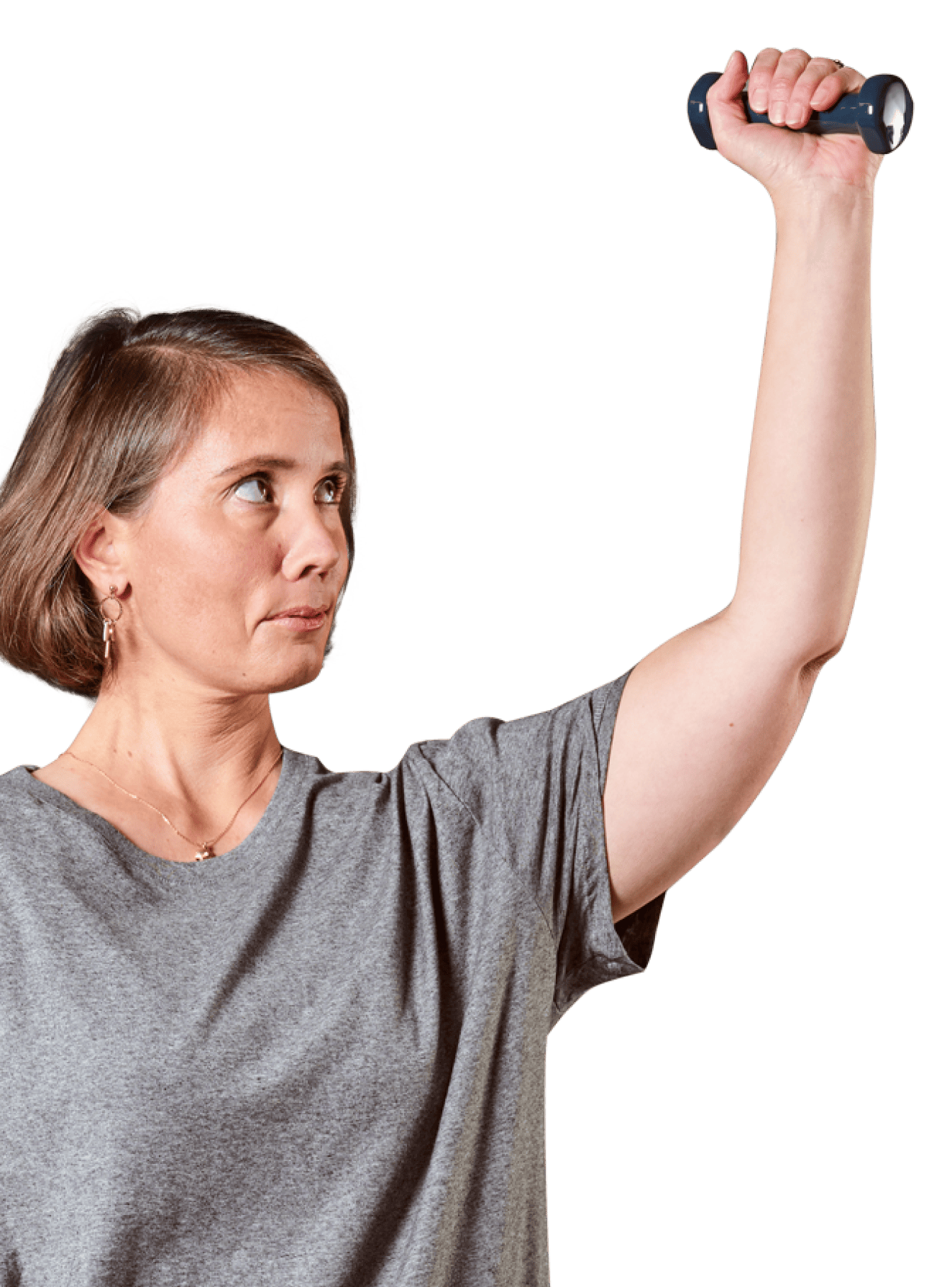
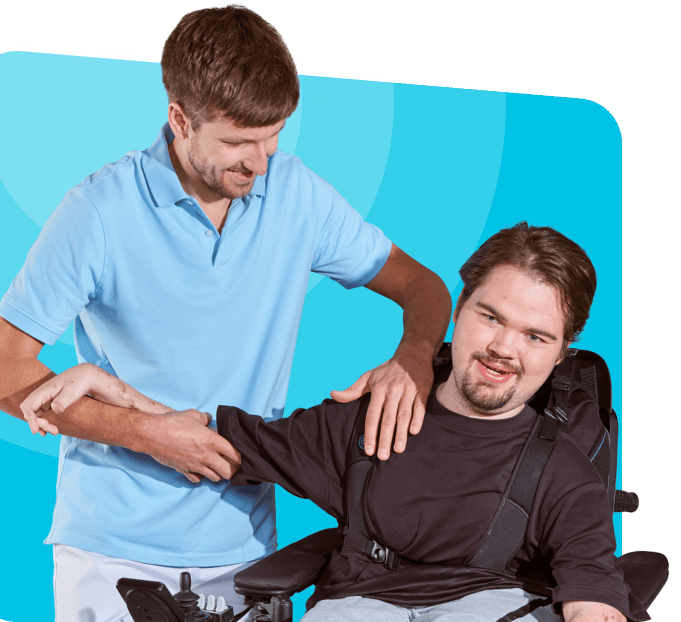 Actual physical therapist and patient, not models. Image taken with their consent.
Build stronger relationships.
Physio.me was developed to help you support people living with NMDs. Create tailor-made exercises for your patients, and follow up on their progress.
Meeting patient needs.
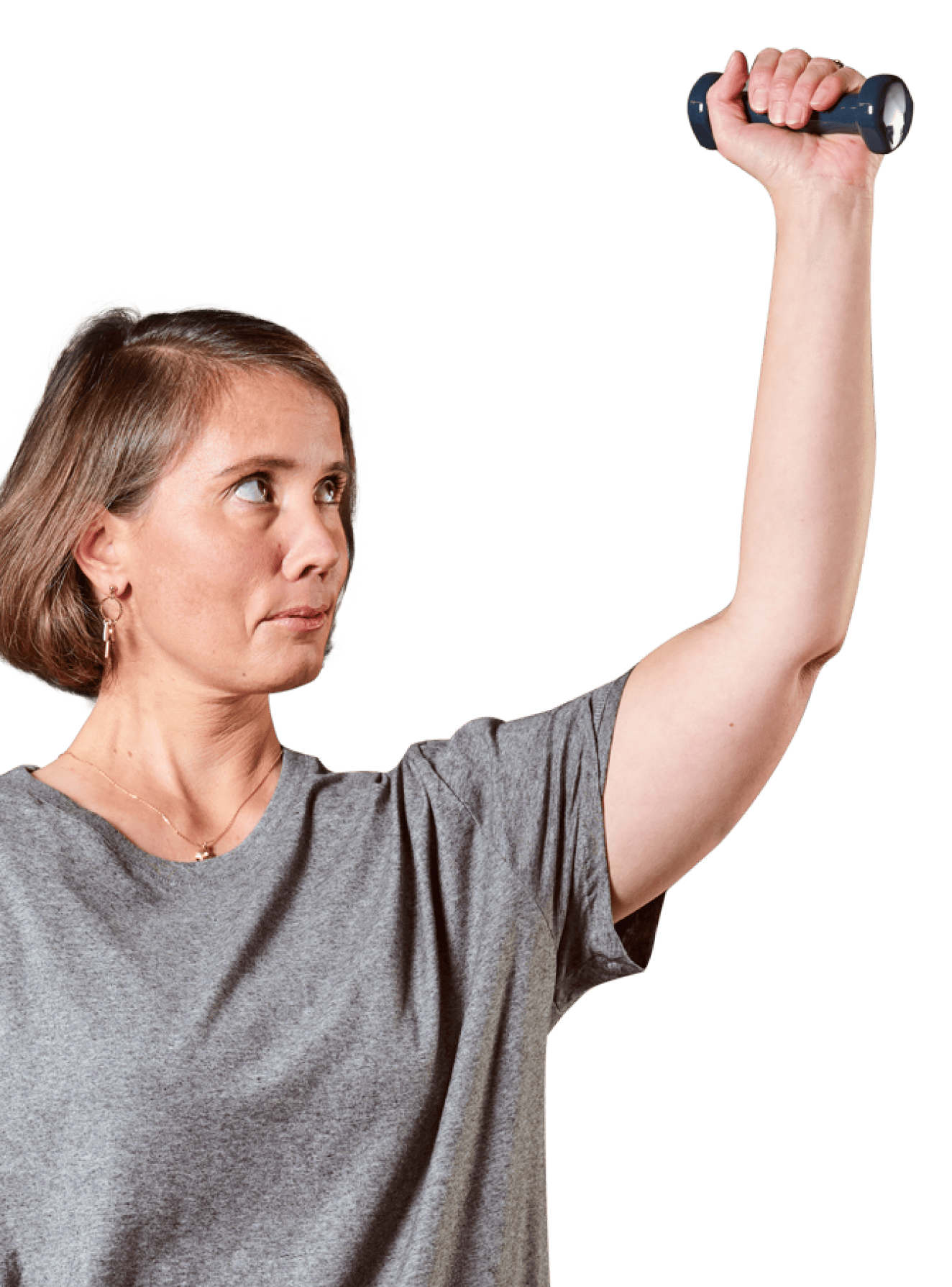
Physical therapy plays an important role in the care that people living with neuromuscular diseases require to maintain their muscle functions.1 To help address their needs, all exercises were designed and performed with physical therapists specialized in neuromuscular diseases. All exercise videos feature people living with NMDs in an inclusive and accurate demonstration.
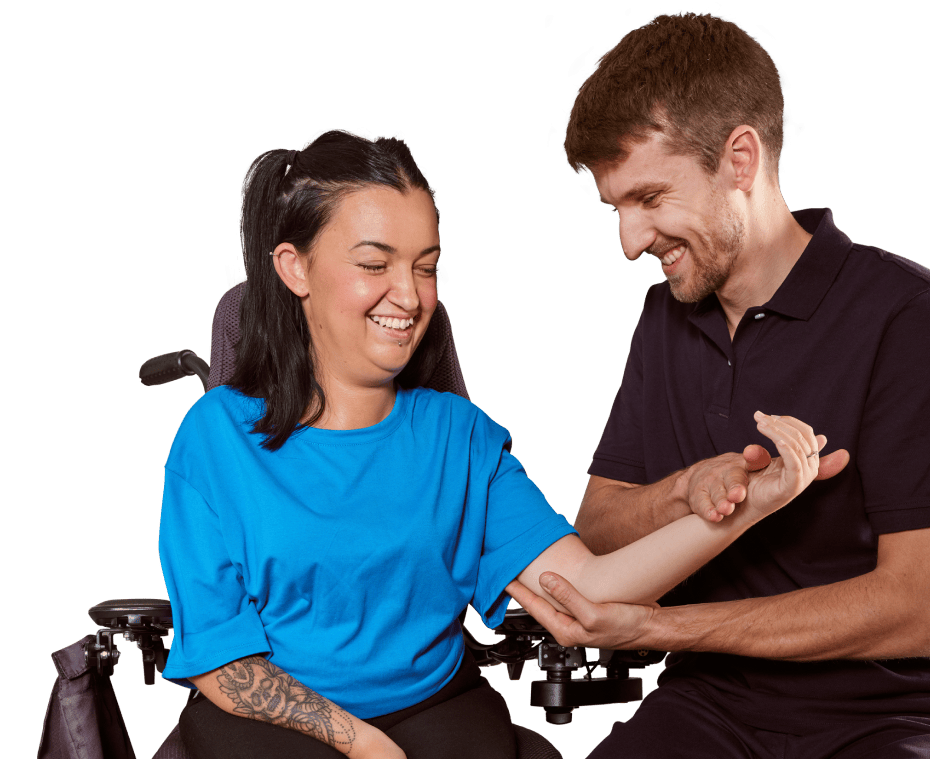
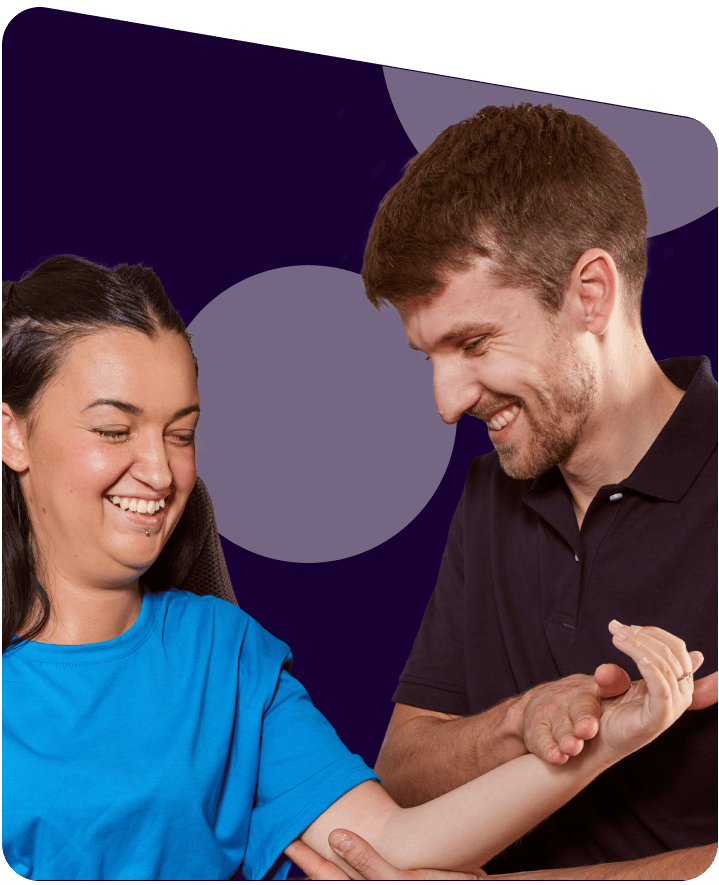 Actual physical therapist and patient, not models. Image taken with their consent.
Created to help support people with NMDs
The dashboard feature allows you to create personalized programs for your patients. Our exercise gallery featuring 120+ exercises is specifically designed for people living with neuromuscular diseases. These features will provide you with the tools to build exercise programs and adapt them as your patients' needs evolve.
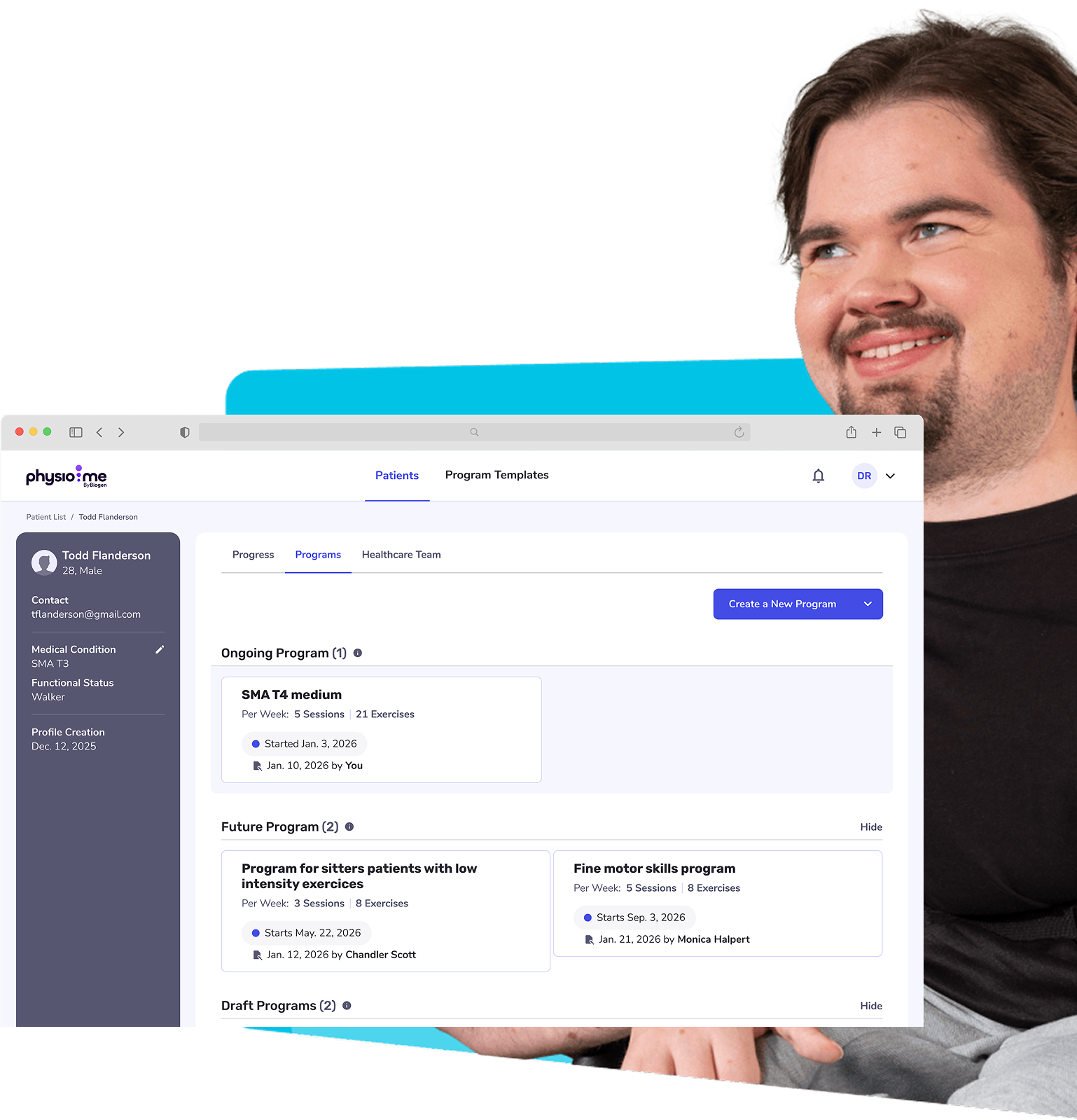 Dashboard snapshot is illustrative and does not depict real patient information. Actual patient, not a model. Image taken with their consent.
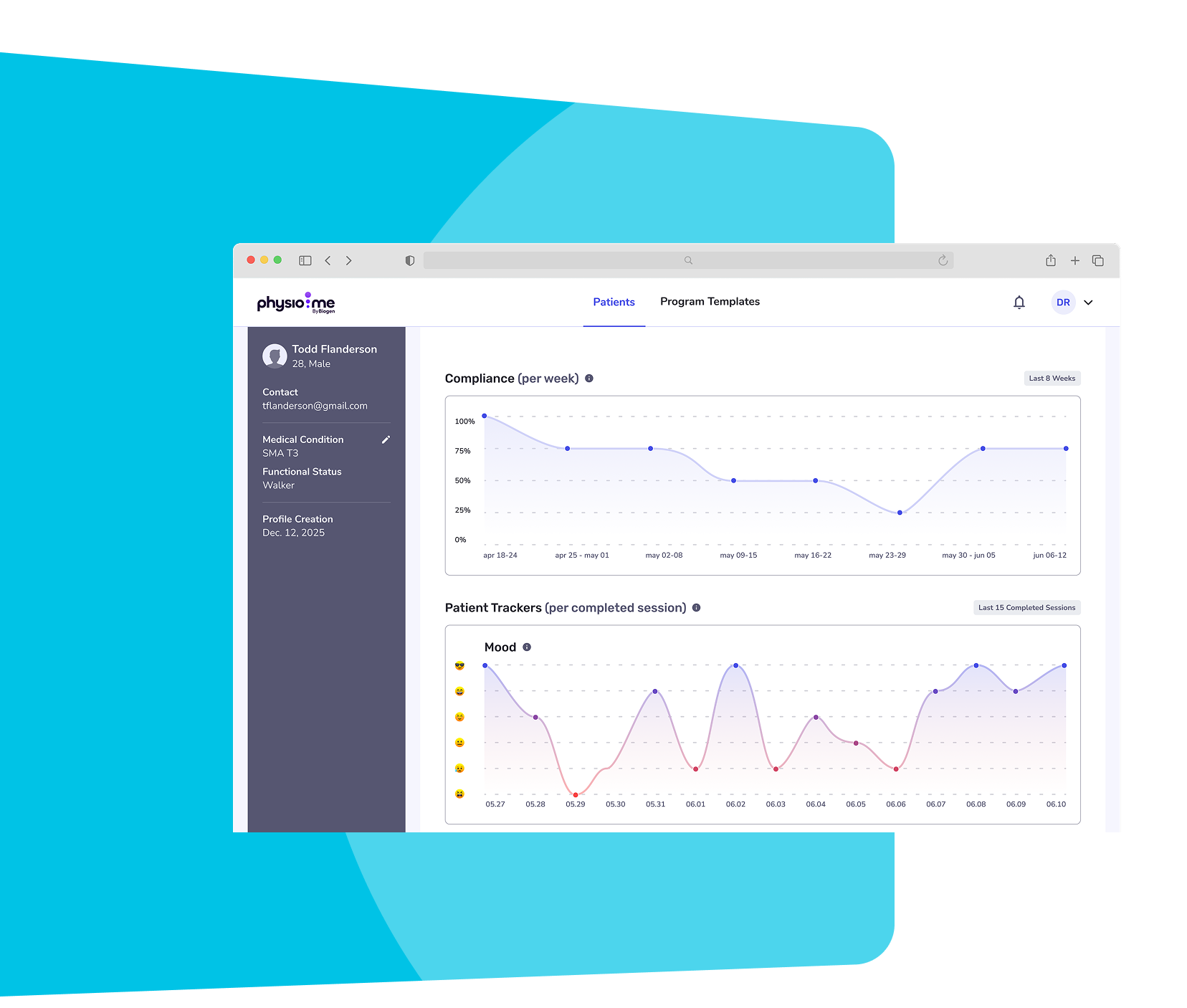 Dashboard snapshot is illustrative and does not depict real patient information.
A 24/7 resource to track progress.
Your patients have the opportunity to rate their mood before and after each session. See the results, and stay up-to-date about their progress right from your dashboard.
The power of motivation.
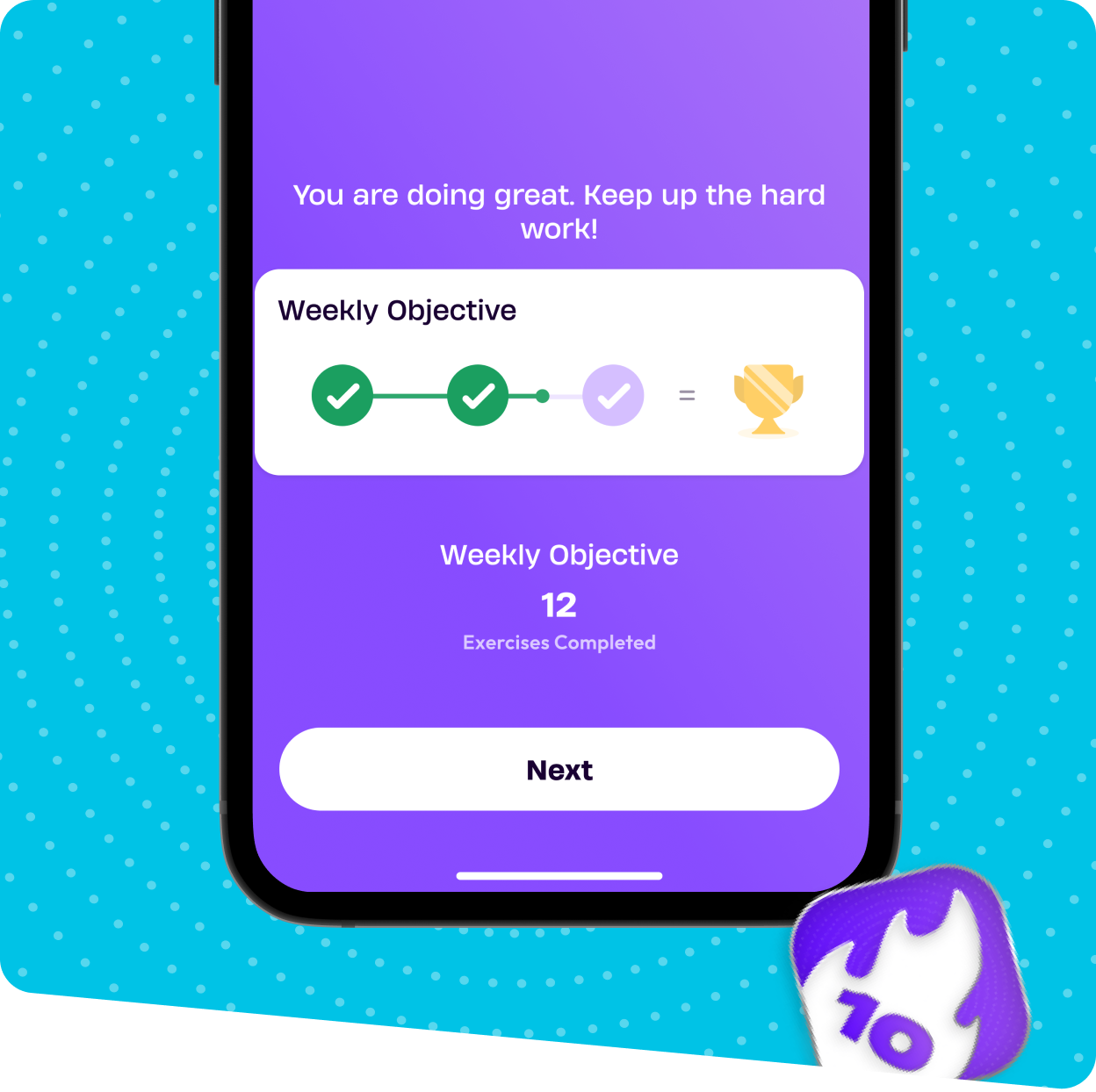
Enhance your patients' motivational levels by setting individualized goals together. As they exercise, they can earn virtual badges to stay motivated on a daily basis.

Potential to maintain muscle function.2,3

Potential to maintain respiratory and cardiopulmonary function.2,3
Possibility to improve quality of care.2,3
Exercising is important.
Scientific research has shown that regular exercise can have a positive effect on the lives of people with neuromuscular diseases.2,3
Benefits of exercise may include maintenance of muscular fitness and cardiorespiratory, cardiac and pulmonary function.2,3
These benefits have been seen across several neuromuscular diseases, such as Spinal Muscular Atrophy (SMA)4 or Amyotrophic Lateral Sclerosis (ALS).5
Exercising is important.
Scientific research has shown that regular exercise can have a positive effect on the lives of people with neuromuscular diseases.2,3
Benefits of exercise may include maintenance of muscular fitness and cardiorespiratory, cardiac and pulmonary function.2,3
These benefits have been seen across several neuromuscular diseases, such as Spinal Muscular Atrophy (SMA)4 or Amyotrophic Lateral Sclerosis (ALS).5
Lay out the first program for your patient
Register on https://portal.physio.me/register .
Once connected, you can add your first patient and fill in their information.
Now you can arrange an exercise program tailored to your patient's needs by moving the selected exercise to the 7-day template.
Add the program objective, the start and the end date
You can follow-up on your patient’s progress directly from a comprehensive dashboard.
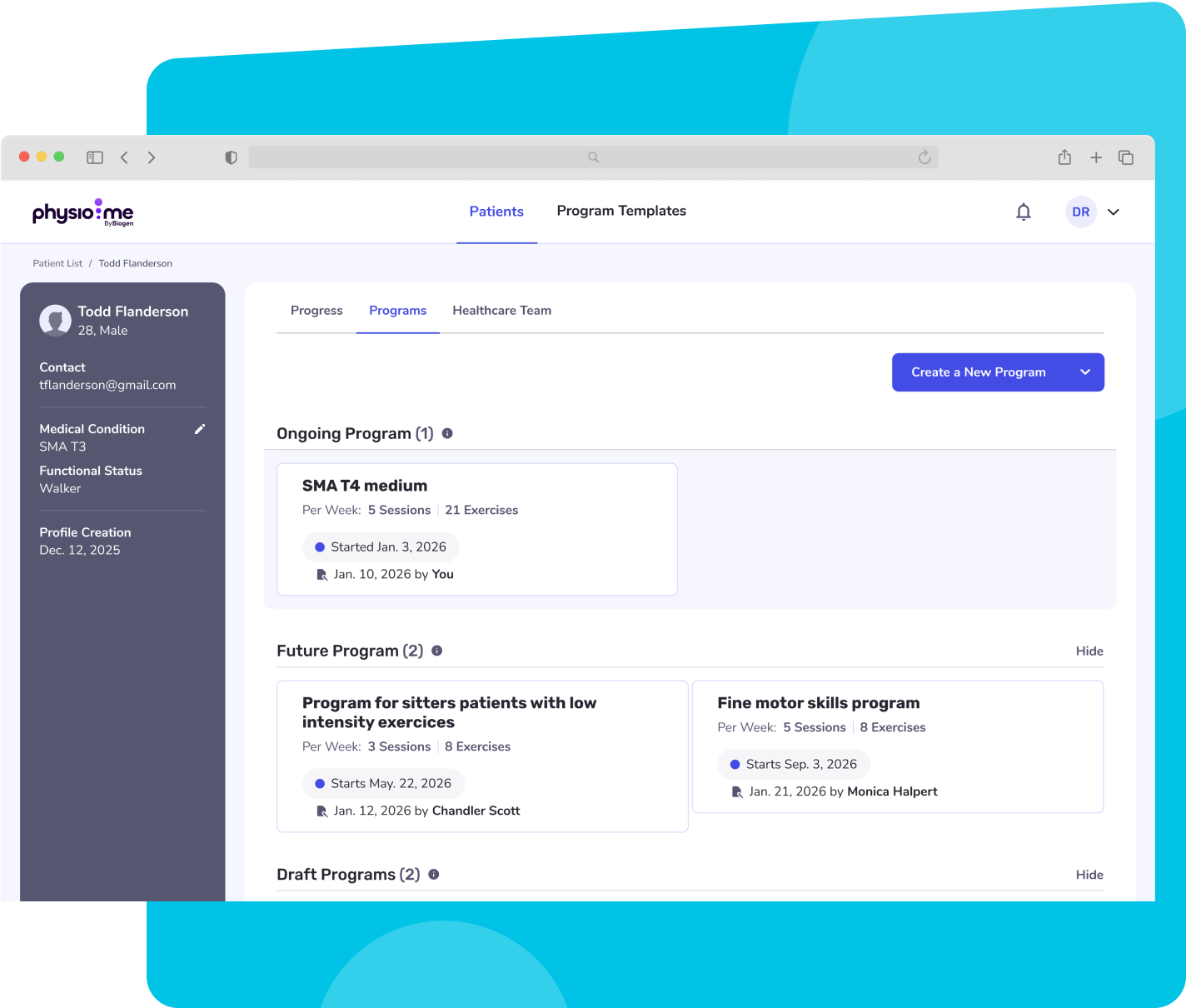 Dashboard snapshot is illustrative and does not depict real patient information.
FAQ
What is Physio.me ?
What neuromuscular diseases (NMDs) can be addressed with Physio.me?
Physio.me includes a video gallery of over 150 exercises that physiotherapists can use when creating personalized programs for their patients. These exercises have been developed and validated by physiotherapists in collaboration with individuals living with neuromuscular disorders (NMDs). Physiotherapists and other healthcare professionals can assess whether Physio.me and its current exercise library are suitable for their patients.
How does Physio.me work?
Physio.me enables physical therapists to create tailored programs for adults living with NMDs. It offers a 7-day canvas where physical therapists can map out the exercise programs by selecting videos from the video gallery that best correspond to their patients’ needs.
The dashboard section allows PTs to monitor their patients’ activity and progress, check adherence to the program, and track other relevant data, such as mood and perceived effort after each session.
Physio.me, is a remote exercise platform that provides people living with neuromuscular diseases tailored exercise programs that may be completed on their own and outside of a clinical setting. Each exercise provides a video demo so people living with neuromuscular diseases can complete exercises to the best of their abilities. At this time, users may not create a program on their own, only their official physical therapist or a member of their healthcare team may create and update programs. To connect to the Physio.me app, users must receive an invitation code from a member of their healthcare team, often their physical therapist.
How do I create an account on Physio.me?
Visit https://portal.physio.me/register. Make sure you have your ID card available, we will need it to validate your account. As a healthcare professional, you can register autonomously on Physio.me.
How do I log into my Physio.me account?
You will receive an email containing your access information (email, password). You will be able to modify your password by clicking on the link in the email. You can connect to your Physio.me account by following this link https://portal.physio.me/login.
- Voorn EL, Koopman FS, Nollet F, Brehm MA. Individualized aerobic exercise in neuromuscular diseases: a pilot study on the feasibility and preliminary effectiveness to improve physical fitness.
- Voet NBM. Exercise in neuromuscular disorders: a promising intervention. Acta Myol. 2019;38(4):207-214.
- Stefanetti RJ, Biain A, Jimenez-Moreno C, et al. Measuring the effects of exercise in neuromuscular disorders: a systematic review and meta-analyses.
- Mercuri E, Finkel RS, Muntoni F, et al. Diagnosis and management of spinal muscular atrophy: Part 1: Recommendations for diagnosis, rehabilitation, orthopedic and nutritional care. Neuromuscul Disord. 2018;28(2):103-115
- Meng L, Li X, Li C, et al. Effects of exercise in patients with amyotrophic lateral sclerosis: a systematic review and meta. Am J Phys Med Rehabil. 2020;99(9):801-810.